The Bed That Isn't There: Reading the Data Behind NHS Virtual Wards
Photo: U.S. Navy photo by Mass Communication Specialist 2nd Class Elizabeth R. Allen, Public domain, via Wikimedia Commons
A hospital ward is, among other things, a data-collection instrument. Someone walks past the bed, takes a reading, writes it down, and the record of an illness is assembled hour by hour. When care moves into a patient's own home, that instrument is dismantled and rebuilt out of consumer devices, phone calls and a clinical dashboard. The illness has not changed. The evidence of it has.
NHS virtual wards — sometimes called hospital-at-home services — now sit within mainstream acute and community planning across the UK. Capacity is routinely described in a single figure: the number of "beds" a system can claim, usually expressed as a rate per 100,000 of local population. That number is politically legible and administratively useful. It is also, on its own, almost silent about what is actually happening to the people behind it.
Two models sharing one label
The first analytical difficulty is that "virtual ward" describes at least two distinct clinical activities. In one, a patient who would otherwise have been admitted is managed at home from the outset — admission avoidance. In the other, a patient is discharged early from a physical bed and monitored at home for the remainder of an expected stay — early supported discharge.
These models generate statistically similar-looking activity numbers and clinically very different risk profiles. A service that reports 60 virtual beds, without saying how the patients arrived there, cannot be compared meaningfully with a neighbouring service reporting the same figure. Commissioners reading across a region should treat the caseload composition — referral source, condition mix, frailty score, baseline dependency — as part of the headline number rather than as an appendix to it.
What travels down the wire
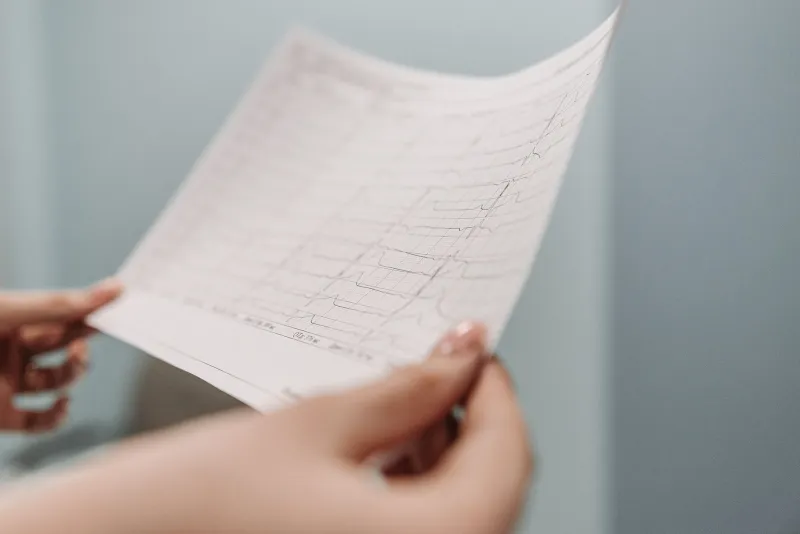
Most virtual ward kits measure a narrow band of physiology: oxygen saturation, pulse, blood pressure, temperature, respiratory rate, weight, and sometimes blood glucose. These are the observations that a device can take without a human present, which is not the same as the observations that matter most.
What tends not to travel is precisely what a nurse notices at the bedside: a change in pallor, a new confusion, the effort of speech, the state of a wound, whether the fridge is empty. A patient can produce a flawless set of overnight observations and still be deteriorating in a way no peripheral oxygen sensor will flag.
This is not an argument against remote monitoring. It is an argument for reading the dataset as a partial view, and for asking what supplementary signal — structured telephone review, a district nurse visit, a carer's report, a primary care record — is being combined with it. Where a service cannot describe that combination, the dashboard is not a clinical picture; it is a fragment.
Missing data is not always missing at random
Every dataset has gaps, but in virtual care the pattern of the gaps carries clinical meaning. A reading not taken because the patient was asleep is benign. A reading not taken because the device was flat, the Wi-Fi failed, the patient could not manage the app, or nobody spoke the language of the instruction leaflet is something else entirely.
Services that report monitoring compliance — the proportion of expected observations actually received — are giving readers a quiet but important indicator of equity. A ward where 95 per cent of readings arrive and a ward where 60 per cent arrive may both be described as "full". Only one of them has continuous clinical oversight.
The quiet screen problem
There is a failure mode that anyone who has worked with alerting systems will recognise: the reassuringly blank screen. Alerts are configured to fire on thresholds, and thresholds, in a patient whose baseline is unusual, may never be crossed. A stable-looking trace can represent a stable patient, a well-managed chronic trajectory, or a monitoring set-up that quietly stopped working three days ago.
Good services therefore publish, alongside their activity figures, an escalation rate — how often a virtual ward patient is converted to a physical admission, and after how long. A very low escalation rate is not automatically excellent performance. It can indicate superb anticipatory care, or it can indicate a service admitting patients who were never sick enough to need a bed. Without case-mix adjustment, the two are indistinguishable.
Reading the numbers with a commissioner's eye
For those scrutinising virtual ward data at system level, several questions repay asking of every reported figure.
- What is the denominator? Beds per 100,000 population describes commissioned capacity, not delivered care. Occupancy and completion rates describe delivery.
- What happens at the boundary? Thirty-day unplanned admission and mortality rates following a virtual ward episode are the outcomes that test whether the model worked, rather than whether it ran.
- Who is included in the equity cut? Age, deprivation decile, ethnicity, digital access and household composition should all be examined, because remote care depends on infrastructure that is unevenly distributed.
- What is recorded as "technology failure"? A device fault and a patient who could not use the device are different problems requiring different remedies.
The honest claim
Virtual wards can genuinely substitute for some hospital days, and the UK evidence base — randomised and observational — supports that for carefully selected patients. What the data cannot yet support is the claim that a virtual bed is interchangeable with a physical one, or that a full dashboard is a safe one.
The discipline the digitised record demands is familiar to anyone who works with health data: distinguish what is measured from what matters, count the people who fall out of the feed, and resist the temptation to read a clean screen as a clinical reassurance. A ward without walls still needs someone to walk past the bed — even if that someone is a nurse ringing at ten o'clock, asking how the patient actually feels.