Signals on the Wrist: Which Wearable Metrics Deserve a Place in the Consulting Room
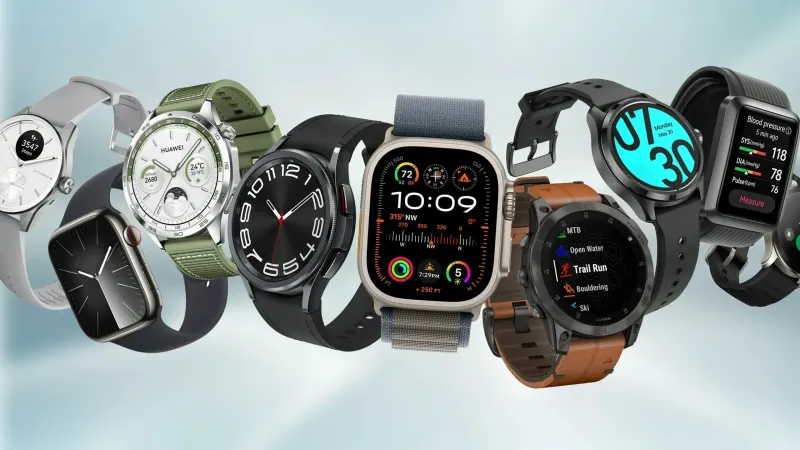
Photo: smartwatch health app heart rate display on wrist close up, via flaremagazine.co.uk
A decade ago, the only numbers most patients brought to a consultation were remembered weights and a rough idea of their blood pressure. Today a wrist-worn device may hold several years of resting heart rate, hundreds of single-lead electrocardiogram recordings, nightly oxygen traces and a proprietary score purporting to measure recovery. The question for general practice is not whether this data is interesting. It is whether any of it is actionable.
The test is a familiar one in diagnostics. A measurement earns clinical weight when three conditions are met: the sensor is accurate enough for the purpose, the finding changes a decision that matters, and the change in decision improves outcomes. Plenty of wearable metrics fail the first test; rather more fail the second. What follows is a rough sorting, offered with the caution that consumer hardware and its algorithms change faster than the evidence base.
The five with real clinical weight
Irregular rhythm notifications and single-lead ECG recordings. These have the strongest claim. Optical pulse sensors can flag irregularity suggestive of atrial fibrillation, and many devices can then record a short single-lead trace. NICE has recognised mobile ECG devices as an option in some AF detection pathways, and the large consumer studies — the Stanford-led Apple Heart Study and the later Fitbit Heart Study among them — showed that although most notifications turn out not to be AF, the yield in older participants is meaningful. The caveats are equally real: frequent ectopic beats, sinus arrhythmia and motion artefact all generate false positives, while paroxysmal AF generates false negatives. What a GP can use is the trace, the date and the symptoms. What a GP cannot use is a notification alone, or a request for anticoagulation based on a watch.
Resting heart rate. This is a genuine vital sign, already taken in every surgery, and the value of a wearable lies in the trend rather than any single reading. A sustained upward drift may accompany infection, anaemia, thyroid disease, dehydration, alcohol or deteriorating cardiac function; a downward drift usually reflects fitness or rate-limiting medication. Optical sensors are reasonable at rest and poor during vigorous movement, so a chest strap remains the better comparator during exercise.
Step counts and activity minutes. Not diagnostic, but useful: they establish a baseline for conversations about physical activity, they motivate some patients, and they can track decline in frailty or recovery after illness. Trials of wearable-supported activity interventions show modest but real increases in walking. Step accuracy is generally good; the derived figures are not.
Sleep duration and regularity. When insomnia is suspected, the first-line tool remains a sleep diary, and digital cognitive behavioural therapy for insomnia is available through some NHS services. A device's estimate of total sleep time is a reasonable adjunct to that history, and its picture of night-to-night regularity can be informative. It cannot stage sleep reliably.
Blood oxygen saturation. Clinical pulse oximetry is a well-established tool, but the wrist is not the finger. Regulators and NHS guidance have warned about accuracy in people with darker skin pigmentation and in poor peripheral circulation, and consumer devices are not held to the same standard as medical oximeters. SpO2 readings are worth discussing where a clinician has already asked a patient to monitor oxygen — in known lung disease, for example — and worth largely disregarding as a self-test for breathlessness.
The three to leave in the drawer
Heart-rate-variability 'stress' and 'readiness' scores. These are proprietary composites derived from proprietary algorithms, with no agreed clinical thresholds and substantial day-to-day variability. They may be enjoyable; they are not evidence.
Calorie-burn and 'energy used' estimates. Error rates are wide, the numbers do not inform any clinical decision, and for some patients — particularly those with a history of disordered eating — they are actively unhelpful.
Sleep-stage breakdowns and composite sleep scores. Minutes of 'deep sleep' and a nightly score out of a hundred agree poorly with laboratory polysomnography. Duration and daytime sleepiness are the quantities that matter, and the latter is measured with a questionnaire, not a wrist.
The arithmetic of rarity
Even a good sensor produces mostly false alarms when it is screening for something uncommon. If one per cent of wearers have the condition being sought and a device is 95 per cent specific, the great majority of alerts will be false. That is not a defect; it is arithmetic, and it is why confirmatory testing exists. The clinical risk is the cascade that follows: anxiety, repeat appointments, ambulatory monitors, occasionally an invasive investigation, all downstream of a motion artefact. GPs are entitled to ask what a finding would change before ordering the next test.
What the device does not know
Motion, cold hands, loose straps, tattoos and skin tone all affect optical sensing, and manufacturers revise their algorithms without notice, so a device bought in 2022 may not be measuring the same thing in 2026. There is also a selection problem: the people most likely to benefit from continuous monitoring are often the least likely to own a device, which means wearable cohorts systematically under-represent older, poorer and frailer patients.
Privacy is part of the clinical picture
Consumer wearables fall outside NHS data governance. Some ECG features carry medical device marking; many do not. Data is typically held outside the UK health system, shared under consumer terms, and may be accessible to employers or, in some circumstances, to insurers. The practical advice is unromantic: export a summary rather than handing over a phone and an account, and read what the app says about third-party sharing.
How to raise it in ten minutes
Be specific and be brief. Name the device and the feature, give the date of the alert, describe what you were doing and how you felt, and bring a short printed summary or a handful of ECG strips rather than a scrolling archive. State what you are asking for — a twelve-lead ECG, an ambulatory monitor, a thyroid function test — and accept that the answer may be no, with reasons. Do not stop prescribed medication on the strength of a notification.
A watch that nudges its owner to walk further and prompts a sensible conversation about palpitations has earned its place on the wrist. It has not earned a place in the diagnostic record. That distinction, rather than any particular sensor, is the one worth carrying into the consulting room.